What's Durable and What's Hype: A Q&A with Jeremy Brody
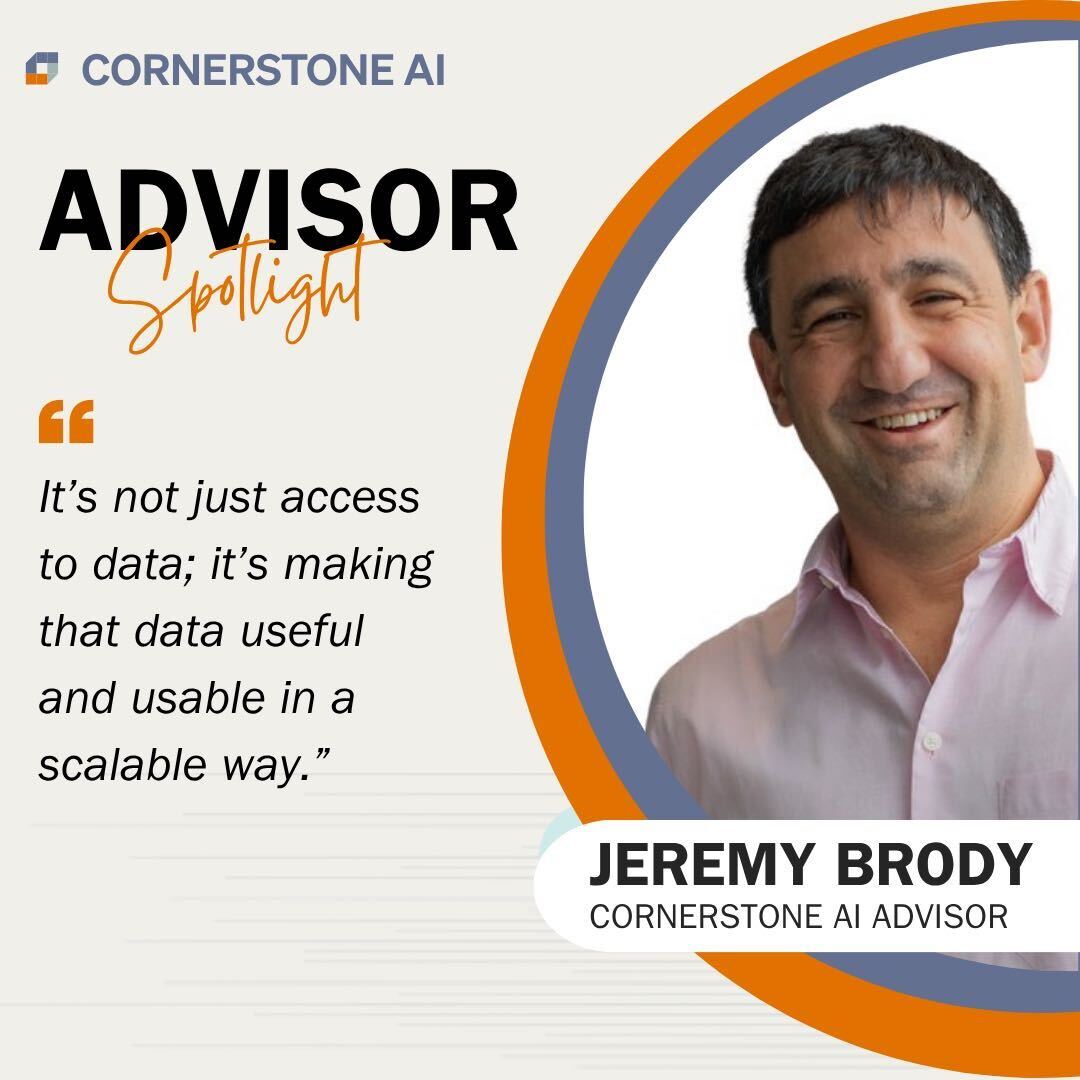
Jeremy Brody, a Cornerstone AI advisor, is founder of Brody Capital & Advisors and spent more than twelve years as Chief Strategy Officer at Kantar Health.
You've spent three decades in real-world evidence and seen a few hype cycles. What's genuinely different about this one?
What’s interesting about these hype cycles is that there is something foundationally true about them, right? There is something that causes people to get excited and to believe that indeed there is an upside opportunity here. Not just a business-as-usual upside opportunity, but a paradigm shift that enables one to really grow at a faster than usual pace. I think the jury is still out as to the impact of AI on real-world evidence and real-world data, but there does seem to be a higher confidence level this time around in terms of this particular hype cycle. I think the reason why that higher level of confidence exists is because the initial results that we're seeing and the speed with which those initial results are coming in give greater confidence for believing that the big upside opportunity is still to come. So I think that that's the main difference between this hype cycle of AI and prior ones: speed and visibility to early impact, which gives you a reason to believe about the larger impact in the future.
Data companies have more data than ever. Why do pharma buyers still struggle to use it?
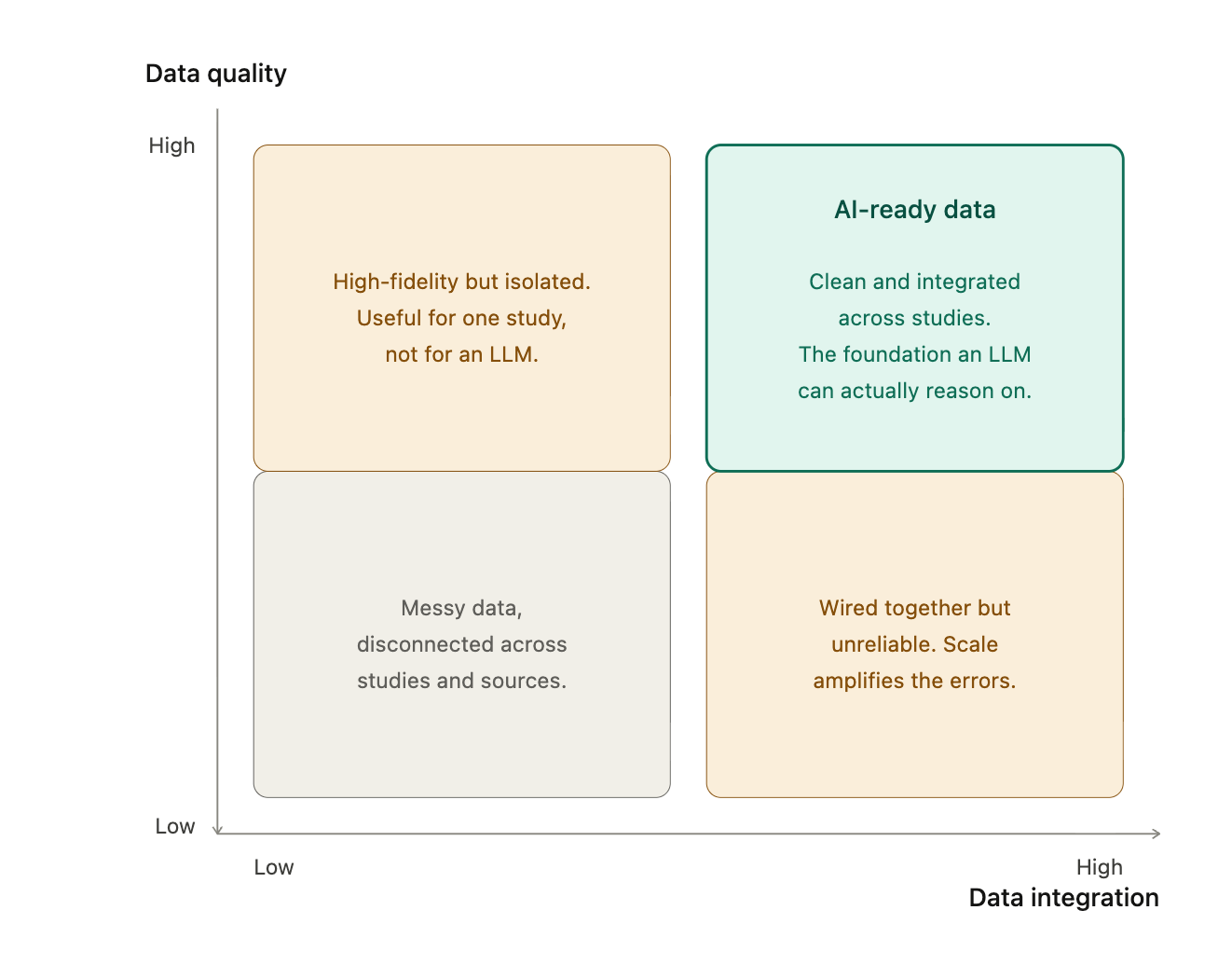
The data that we have access to as an industry was typically created for other purposes. So, for example, we have a lot of electronic medical record data, and those data were created for patient care and also for billing purposes. We have a lot of claims data—those data were created for billing and reimbursement purposes. We have a lot of omics data, and those data were created as a result of clinical care and the treating of patients. But just because you have data doesn't automatically enable you to use that data. That data has to be put into a format with an ontology, and it has to be cleansed and made appropriate. The term we use in the industry is “fit for purpose,” so you can use it however you want to use it even if it wasn't created for that purpose initially. That remains challenging for pharma because the data comes in from so many different sources in so many different formats, and it’s not fit for purpose, and therefore is ultimately limiting. AI holds the promise of being able to take those data and make them more usable, more quickly. And of course, that foundationally is what underlies the Cornerstone business.
What will separate the data companies that win over the next five years from everyone else?
I think that historically, data companies have either tried to go broad or deep, and that has been based on the business model that they have in place, their existing foundational relationships, and so forth. So, either you're trying to cover an extremely large population of people, but you do it sort of in a shallow way, or you have access to data on a more narrow population, but you're going as deep as possible.
And going back to what we were just talking about in terms of “fit for purpose” data, each of those has its own application, so the broad data sets are very useful for understanding populations of people, and people across a disease, for example, or a geography, or whatever it is. And the more narrow data sets are more useful for particular use cases that require a depth of data; for example, drug discovery and other related types of activities.
I think that data companies in the next five years can succeed with either one of those models, but I do believe that what we are seeing now increasingly are companies whose own data has both breadth and depth or in partnership or in combination with companies have both breadth and depth. I think that that will be critical for success in these coming years—having both breadth and depth.
But the other part of it, which again is relevant to the Cornerstone business, is that it's not just access to data; it’s making that data useful and usable in a scalable way. And that, of course, is the second piece. So, part one is getting access to the data, ideally broad and deep; and then part two is taking that data, making it useful, making it fit for purpose. Those who succeed at that will have the greatest likelihood of winning.
Each purpose sometimes requires data to be created or formatted or curated in a particular type of way that's relevant for that use case—again, to the extent that you have scalable curation and formatting capabilities, you'll be able to then use that same data set for multiple use cases and multiple purposes. And again, I think that that's a winning business, where you're able to go ahead and cover multiple purposes because it increases your market size and therefore the size of the business that you can become.
Why Cornerstone, and why now?
I think the thing that attracted me first and foremost to Cornerstone was Viraj. So why Cornerstone? Why now? Because I think he and the founders and the team are exceptional. They are a brilliant group of folks who are mission-driven and who I think have an incredible entrepreneurial spirit and are lovely people who you actually want to work with.
So reason one for “Why Cornerstone?” is Viraj and the team. And then the second is having access to data. Data availability, of course, is growing exponentially, at scale. Making that data useful, usable, fit for purpose, is today and will remain a huge challenge for the industry. And I think Cornerstone has taken a really thoughtful approach to building the appropriate technologies and use cases for creating that data enablement that will then fuel a lot of the exciting developments that we'll see in the life sciences and healthcare industry more broadly over the coming years. It's a great combination of people, technology, and timing that all are coming together to fuel the growth of Cornerstone.